Given that more than 99% of all species ever to live on Earth are now extinct, we have the good fortune of being among the lucky few survivors of four billion years of repeated extinction events. The Earth weighs around six-trillion-trillion tons, and when she throws her weight around, pretty much everybody dies. That we are alive at all comes from an amazing history of rolling the dice and managing to get by for 4 billion years without ever rolling “snake eyes.” The prize for winning that first roll of the dice was a rocky planet with an ocean, orbiting in the “Goldilocks zone.” Half a billion years later, we won a primitive cell with a strand of RNA and a few protein molecules, and it became our most distant ancestor. We are attached to that cell by a thin strand that stretches back all of those billions of years.
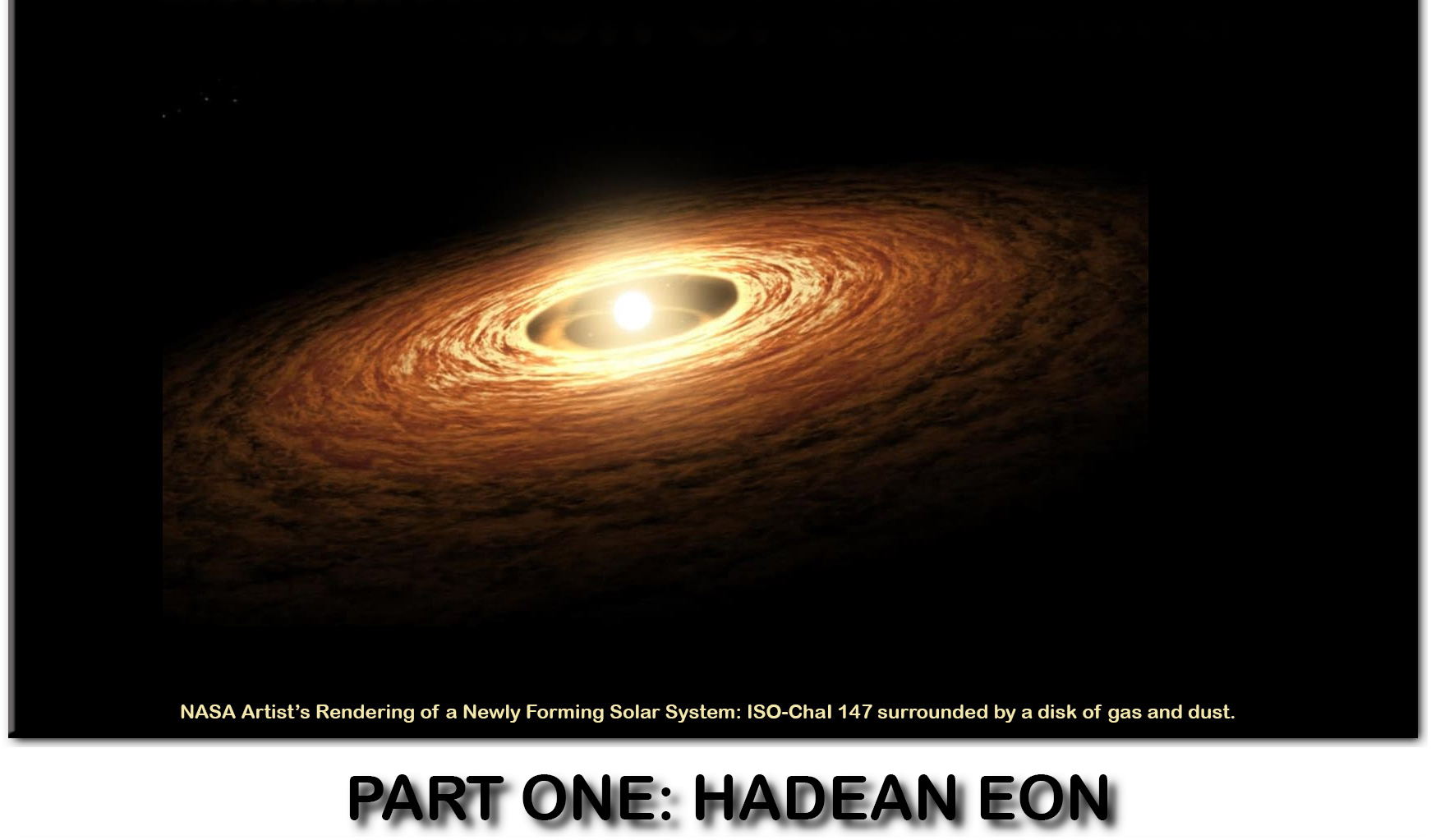
It’s hard to imagine a more violent birth than the birth of a solar system. Although, for the Earth, the process began gently enough, with clouds of gases and dust grains orbiting the sun, slowly coalescing like dust bunnies under the attraction of electrostatic forces. For millions of years, elements, molecules, and motes of dust bumped into each other, bonding to become grains, pebbles, cobbles, asteroids, and then, finally, planetesimals (like the image below) with enough gravitational force to sweep up all the debris within their orbits.
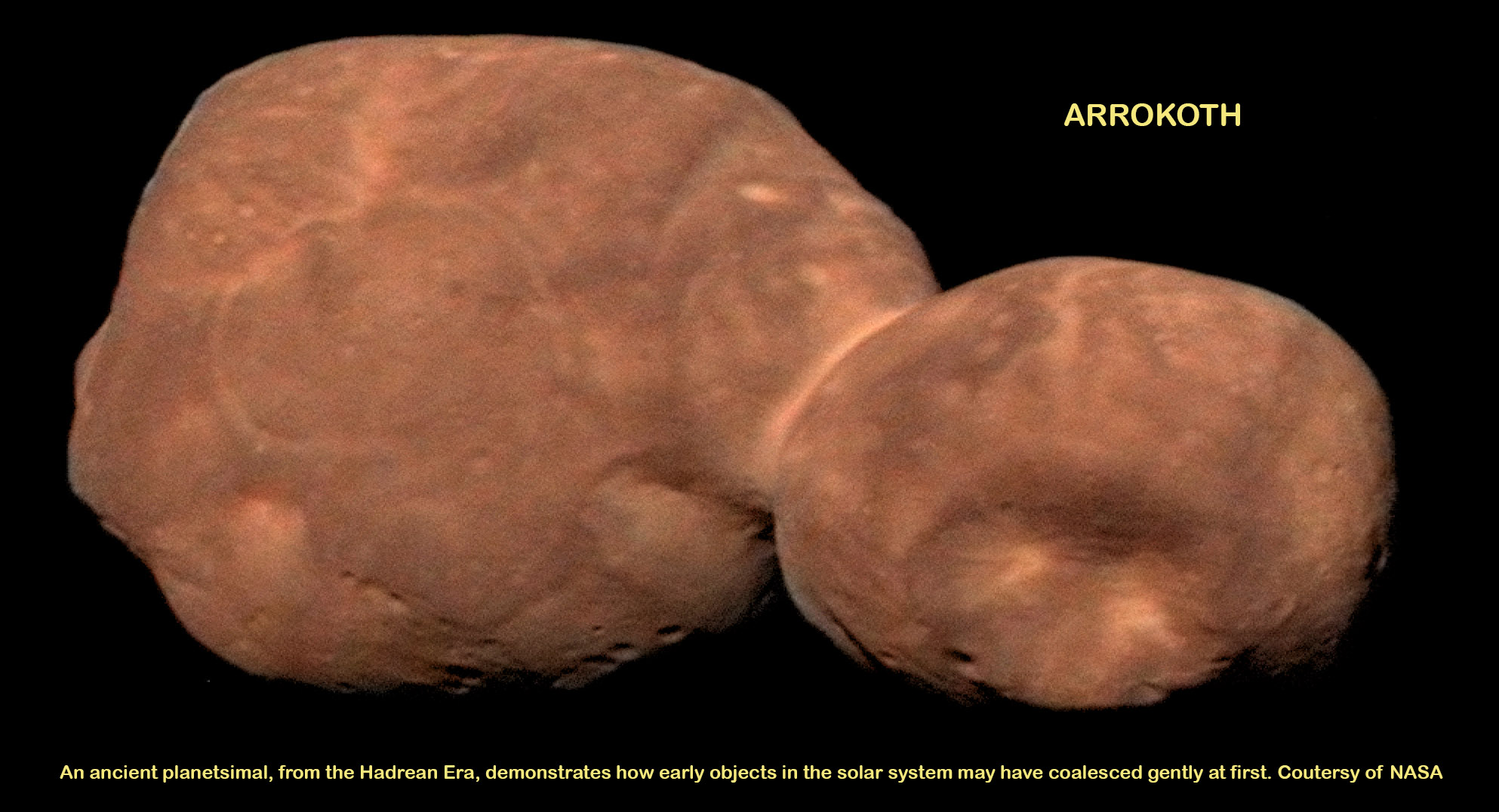
The planetesimals danced in unstable orbits around each other and around the sun while being bombarded by every possible projectile from cobbles and boulders to mountains. They grew exponentially, orbiting each other in this excentric dance until their orbits collapsed and they slammed into each other with the force of nuclear warheads. The bodies that didn’t collide were slung into new orbits (like the one above found in the Kuiper Belt) or off into empty space. [How this planetesimal might have ended up in the Kuiper belt.]
And then came Theia, about the size of Mars (named Theia) collided with the young Earth in a glancing blow at roughly 22,000 mph. About a third of Theia’s mass merged with Earth, while the rest was blasted into empty space or into orbit as molten debris around the Earth. Eventually that debris coalesced into the Moon. And so, although there were many more bombardments, the planet we call home was born, a battered globe with oceans of lava. At that time, “our home” would have been around 3,000°F, with a ground level atmospheric pressure of around 14,500 pounds per square inch. [14,000 psi—how could that be?]
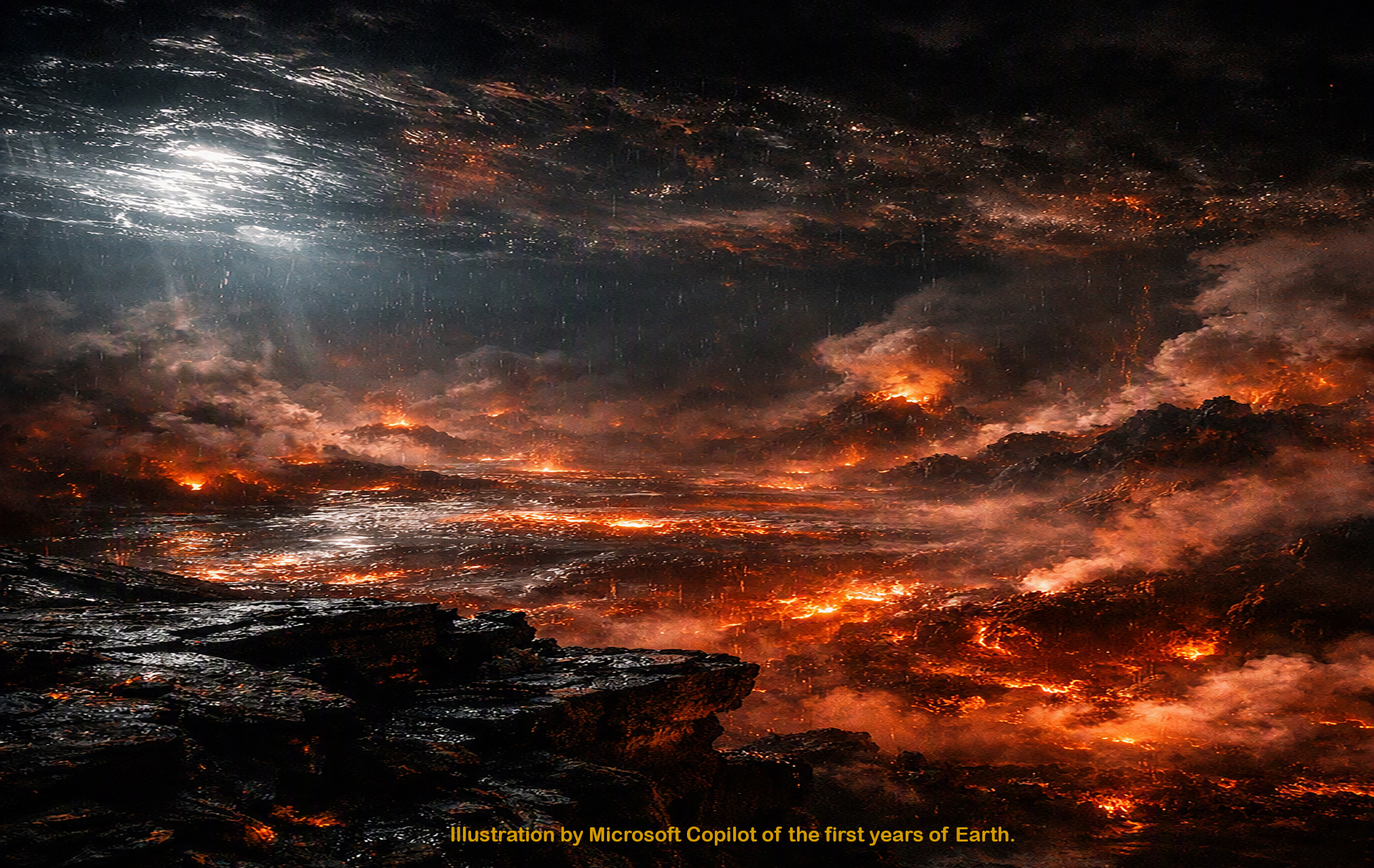
The Hadean Era was given that name because the Earth was like our vision of Hell (Hades in Greek myth). After its collision with Theia, the Earth had skies blackened with vapors of rock, metal, and glass, plus an atmosphere compressed to a thousand times denser than at present. Today, you will find those pressures five miles under water in the Mariana Trench. [Why such a dense atmosphere?]
Let’s pretend we are attending a 4th of July fireworks display in year one. We are on a ledge of slag with a view across a valley full of lava. This is just a normal summer day in the first year of Earth’s very first climate. We are under a sea of a supercritical blend of CO2 and H2O. This atmosphere is so corrosive it effectively dissolves rock, metal, or people like sugar cubes. So, we are crushed, flash boiled and then digested by this atmosphere the instant we arrive.
Setting the “flash boiling” aside, we are gazing across a valley of fire with nothing that could be called land, just sheets of slag and piles of basaltic rubble floating on lava. And we are under that sea of supercritical water and CO2. The fluids in this atmosphere are neither liquid nor solid, but they are completely transparent, so we see through them, but we can see the surface of this amazing sea shimmering against the uncritical gases above us. We are surrounded by rock vapor, metal oxides, alkali metals, liquid glass droplets, and sodium vapor. We have to hold our breaths because sodium vapor explodes if it comes in contact with the fluids in a pair of lungs.
Volcanic and hydrothermal vents create huge thermal updrafts spewing even more soot, toxins, and supercritical CO2 and H2O all the way into the upper atmosphere where they spread, blocking the sun. At around 30,000 feet air pressure and temperatures drop to a level that permits water. At that altitude, the skies would be choked with soot-filled clouds and blackened rain.
In a supercritical state, water and CO2 blend beautifully, and the atmosphere then (as now) lowers in density at higher altitudes. Rain and fog become possible when the temperature gets below 700ºF at a barometric pressure of only 3,200psi. The rain is still hot enough to boil our blood as it covers us, but it turns back into a supercritical fluid and falls into a supercritical ocean, never reaching the Earth. [How this works …]
For millions of years, the temperature and barometric pressure drop slowly. There will still be volcanos everywhere you look, but they will be mountains above the surface of a very hot ocean. Eventually, temperatures fell to around 700ºF, the air pressure fell to around 3200psi, and the layer of supercritical water and CO2 finally turned into a 700º ocean. [How can water be liquid at 700ºF?]
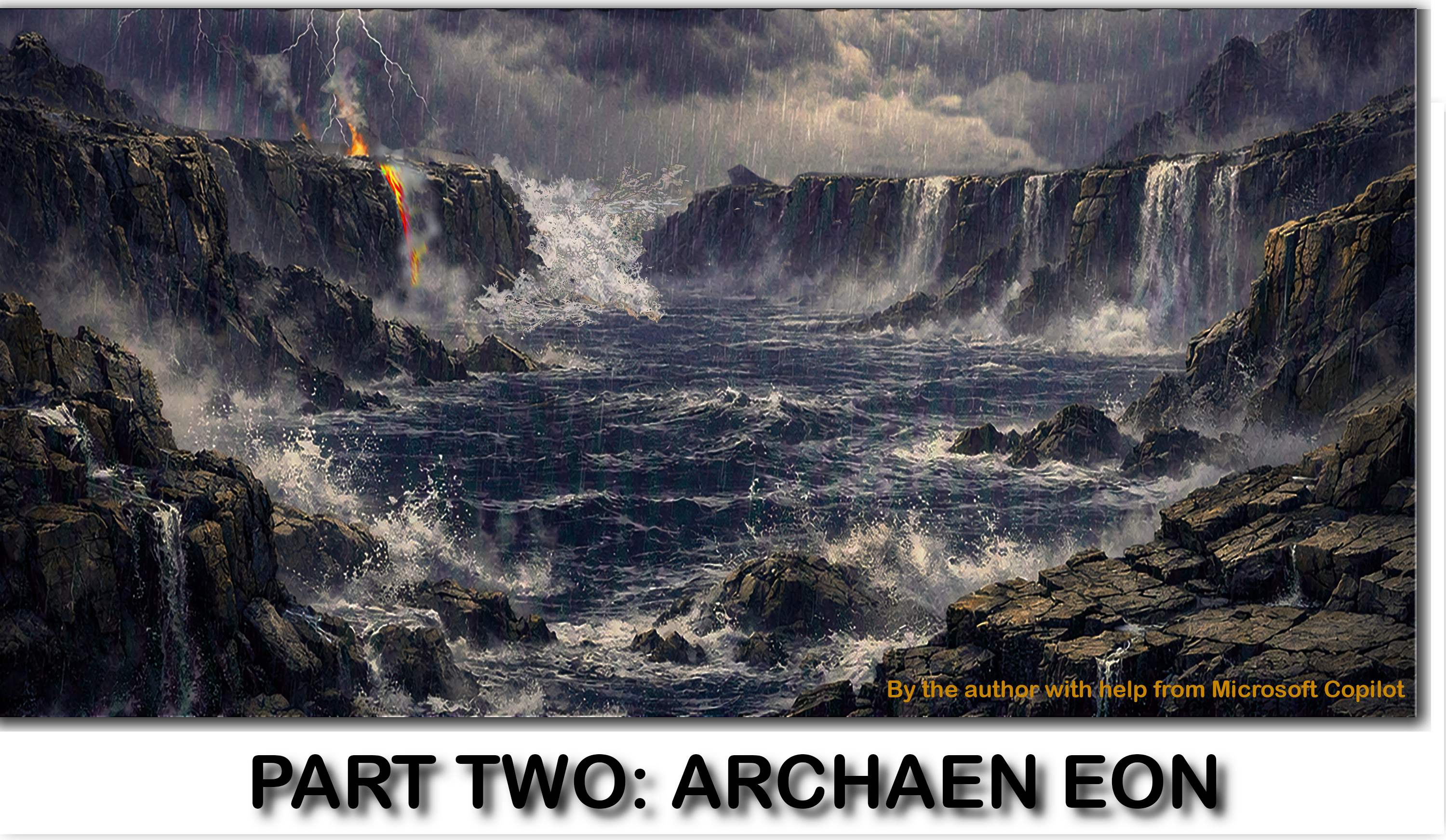
After around 100 million years the Earth cooled from a molten surface into a world covered with water at around 275°F. The transition between supercritical and normal fluids occurred at decreasing altitudes until a permanent ocean (albeit a very hot one) began to form. Although the ambient temperature no longer supported supercritical water, the air pressure remained very high (up to 1,500psi), so water was unable to boil even at these high temperatures, so it rained this hot torrent continuously around the globe for thousands of years. The weather forecast for any day might have been, “Uninterrupted boiling hot rain for the next ten thousand years.” This was Earth’s second climate.
Life’s first effort …
This planet would have had no oxygen in its atmosphere and would not be survivable for most modern life, but it was perfect for our first ancestors. They would have been anaerobic, thermophilic protolife (oxygen-hating, heat-loving almost-life), and they used the heat in the water as an energy source and chemistry in the water as fuel. There is good evidence in our DNA that our first ancestors were descendants from these not-quite-alive protocells.
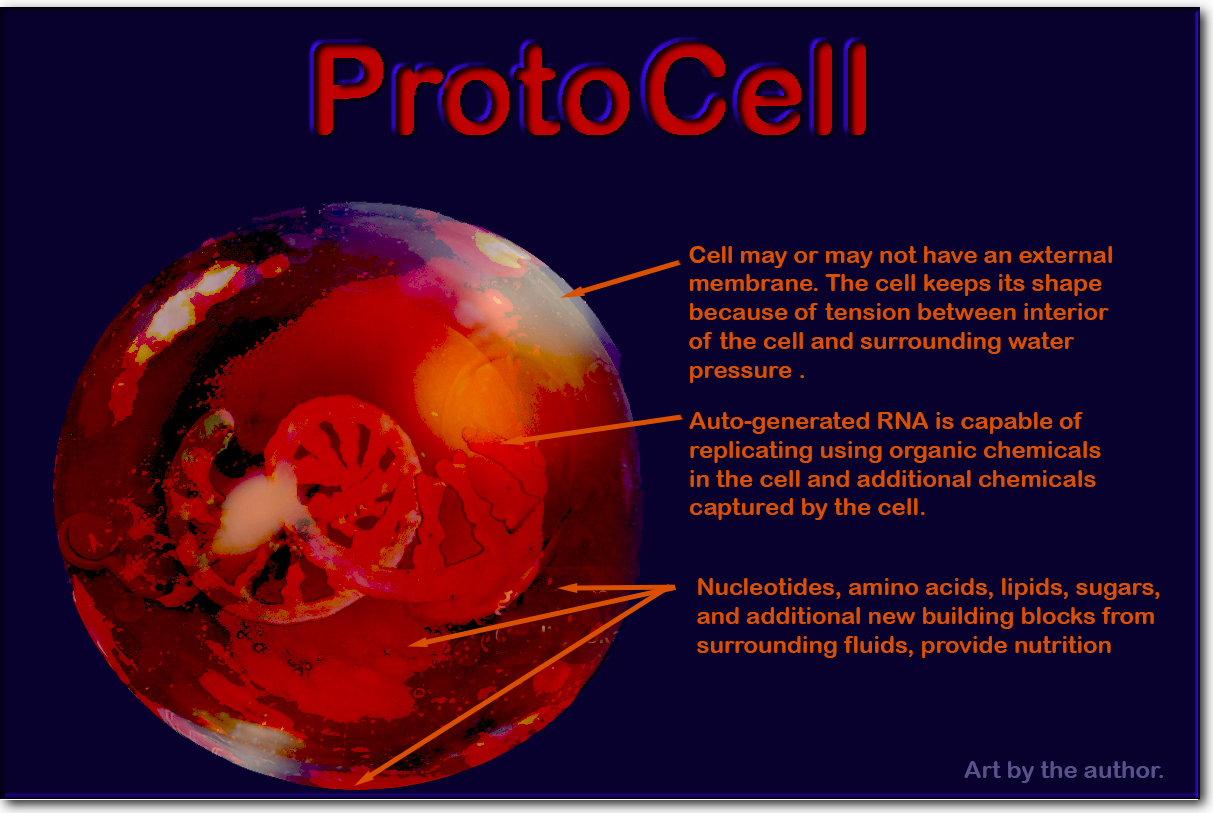
In brief, the theory posits that hydrophobic organic molecules spontaneously formed under extreme pressure, heat, and abundance of appropriate chemicals. Being hydrophobic (water haters), these molecules tended to form into bubbles of fat in the water, and if there were enough of the right chemicals in them the bubbles could almost behave as if alive.
Under these conditions, RNA (ribonucleic acid) could also form spontaneously on the right mineral catalysts and become trapped inside these droplets, creating simple protocells, capable of copying their RNA under ideal conditions.
Although they were organic (looking like bacteria), these protocells are “alive” in the same limited sense that a battery powered toy might seem alive: they run as long as energy and molecules flow through them, and they stop when the chemistry stops. [8]
Here from the start?
There would have been organic chemistry suitable for producing protocells from the very beginning. White smokers produce organic chemicals in astronomical quantities. These chemicals include molecules such as RNA parts, proteins, metal catalysts, peptides, amino acids, lipids, and fatty acids that can assemble into everything a healthy, living cell could hope to be, and there is good reason to believe that these primitive cells populated Earth almost from the beginning. At some point, a few of them might have taken the next evolutionary step and learned to reproduce. That would require reliable RNA replication as a stable way to pass on genetic information. We know that this happened, but we do not know when. These billions of fat droplets formed 24 hours a day by the millions for millions of years. Even with the odds against life forming under such conditions being a billion to one against, eventually life was bound to happen.
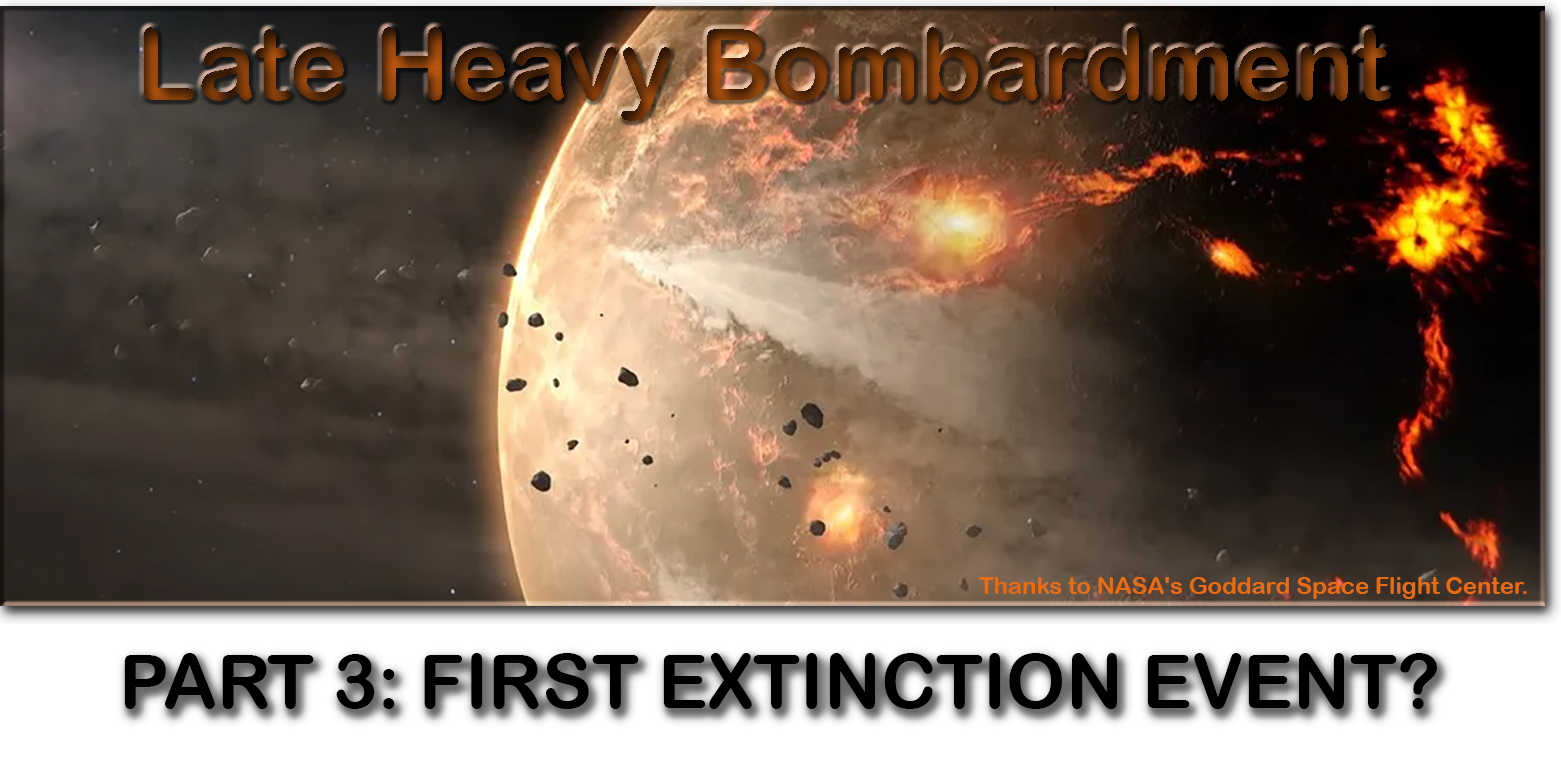
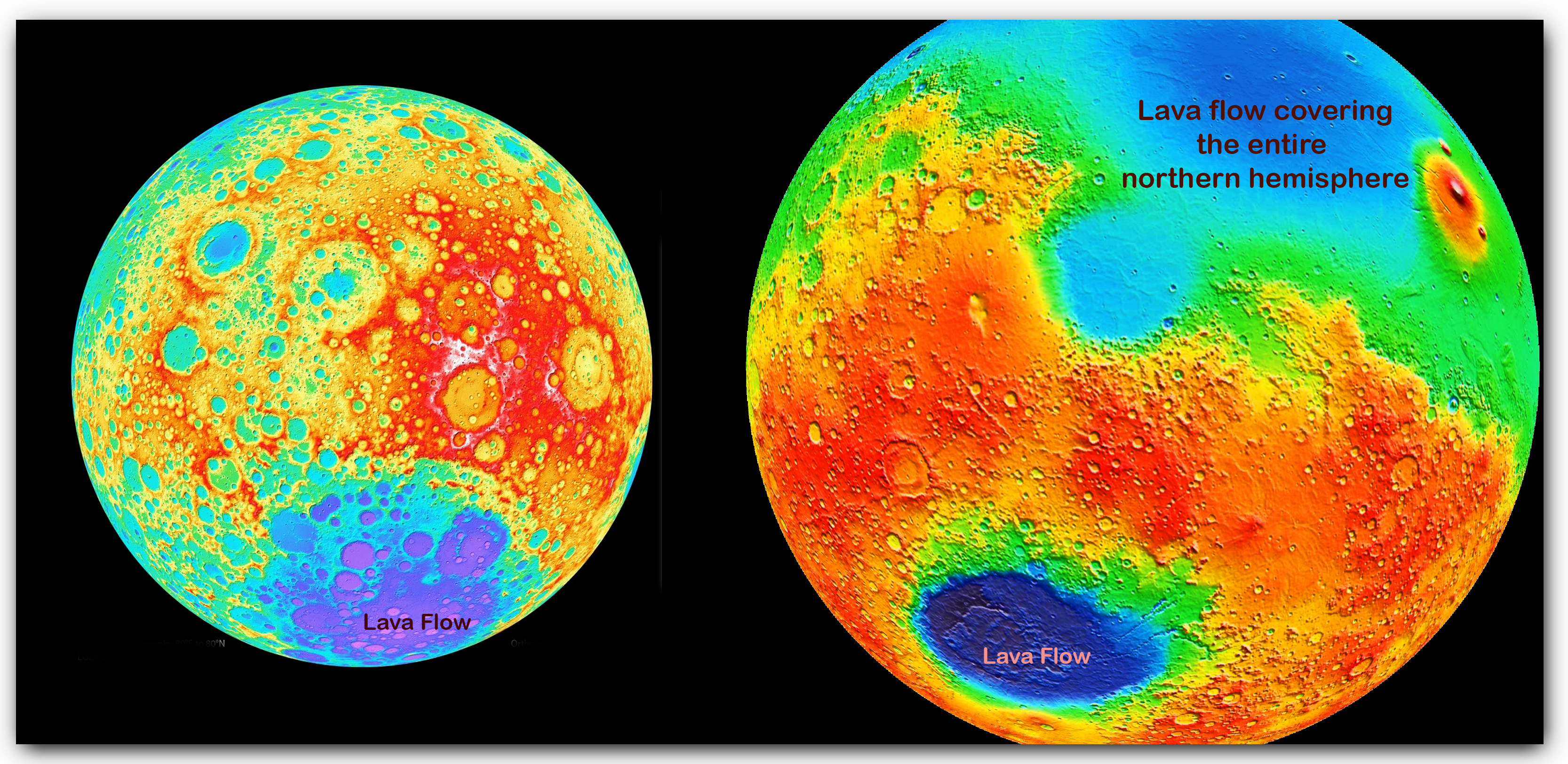
The hypothesis is that the gas giants in the outer bands of the solar system moved into new orbits, disrupting the Kuiper Belt, and a shower of asteroids, comets, and meteors showered the rocky planets for several million years. The impacts would have turned huge swaths of the planets and moons into lava flows (clearly visible on the Moon and Mars). This is called the “Late Heavy Bombardment”
There is no good way of knowing whether life developed before the Late Heavy Bombardment (LHB), because if it did, it likely did not have survived the onslaught. We only know that life might have happened before the door closed. Maybe life squeaked through, or maybe it had to reinvent itself.
Late Heavy Bombardment …
We don’t know that a LHB actually occurred, but evidence suggest that the inner Solar System experienced a spike in large impacts between around 4 billion years ago. The Earth, Moon, Mars, Mercury, and possibly Venus all show signs of catastrophic impacts that appear to cluster in this time window.
The strongest evidence comes from the Moon. During the Apollo missions, astronauts collected rocks from inside major lunar basins. Many of these rocks are material created by the heat of enormous collisions. These impacts all seem to have occurred around 4 billion years ago.
We cannot directly age date craters on Mercury or Venus, and Mars’s crater ages can only be inferred statistically by comparing crater densities to those on the Moon. Even so, Mars’s largest basins (Hellas, Argyre, and Isidis) appear to be roughly the same age as the Aitken Basin on the Moon.
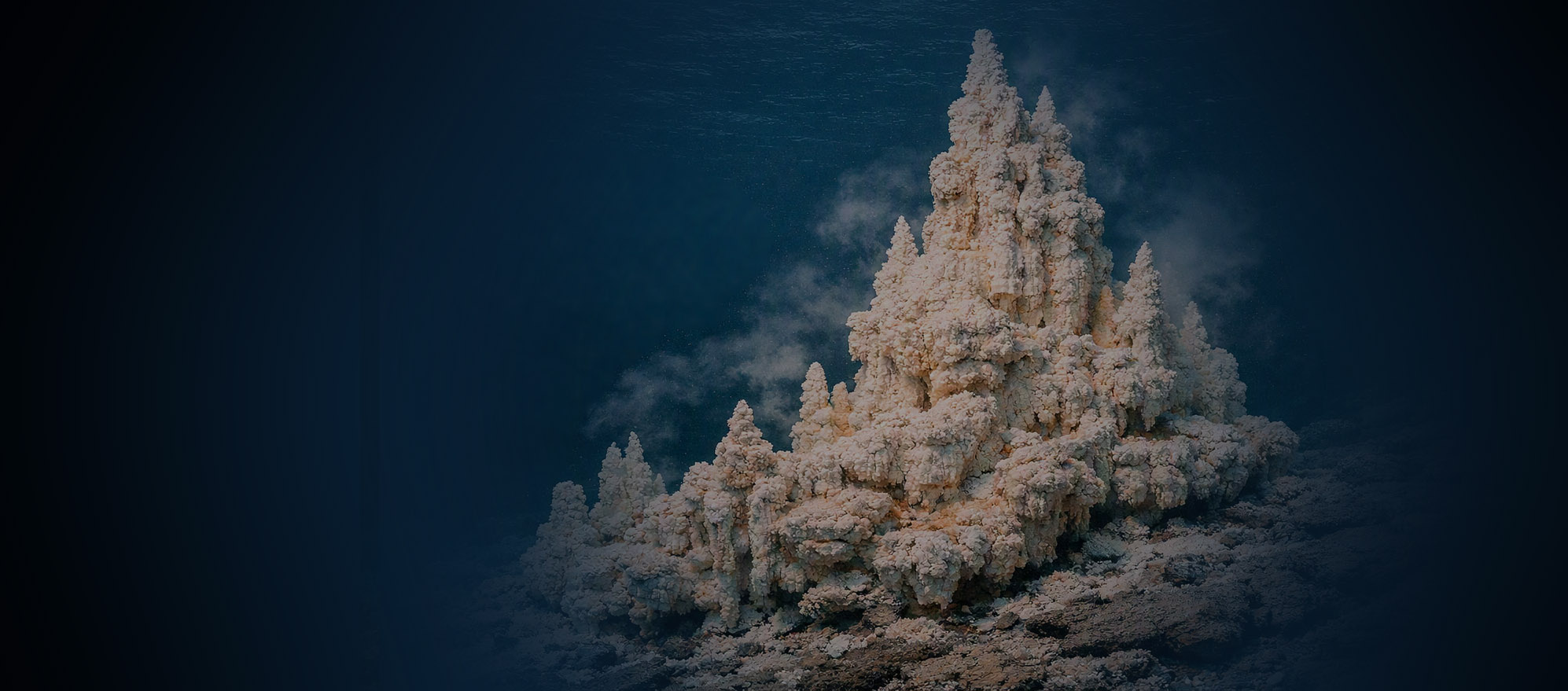
Finding safe places … Life (if there was life) will have needed safe places to hide and evolve. There were few-to-no safe places on the rocky planets, but there were a few on Earth. Across the planet, there were more cracks than ever, and more geysers were spewing boiling water into the sky. Not surprisingly, the same thing was happening under water. Called black smokers, underwater geysers blast chemical filled water into the belly of the ocean. Even today, these “black smokers” provide food and protection for creatures living in the depths of the modern sea floor, and they would have provided the same shelter for protocells during the Late Heavy Bombardment.
But black smokers are brutal compared to the much more benevolent “white smokers” (often called “lost cities”), which could bring even better nutrients from below the ocean floor, and they provided pores that could be shelter for whatever life might have existed at the time.
First life …
Whenever they first appeared, the protocells had most everything they needed to be alive, but the elements just weren’t put together quite right. For example, the right combinations of carbon, oxygen, hydrogen, nitrogen, and phosphorus can produce RNA, the first self-replicating molecules. How this came about is still debated, but RNA would have been the workhorse for metabolism and replication in these early cells. All of the appropriate molecules might have come together under great compression within the vents of the white smokers. In billions of years of exhausting billions of nearly acceptable combinations of chemicals, statistically, some of them will have been vital, living cells, and one of them is our great-great-great … grandmother.