PART ONE: HADEAN EON
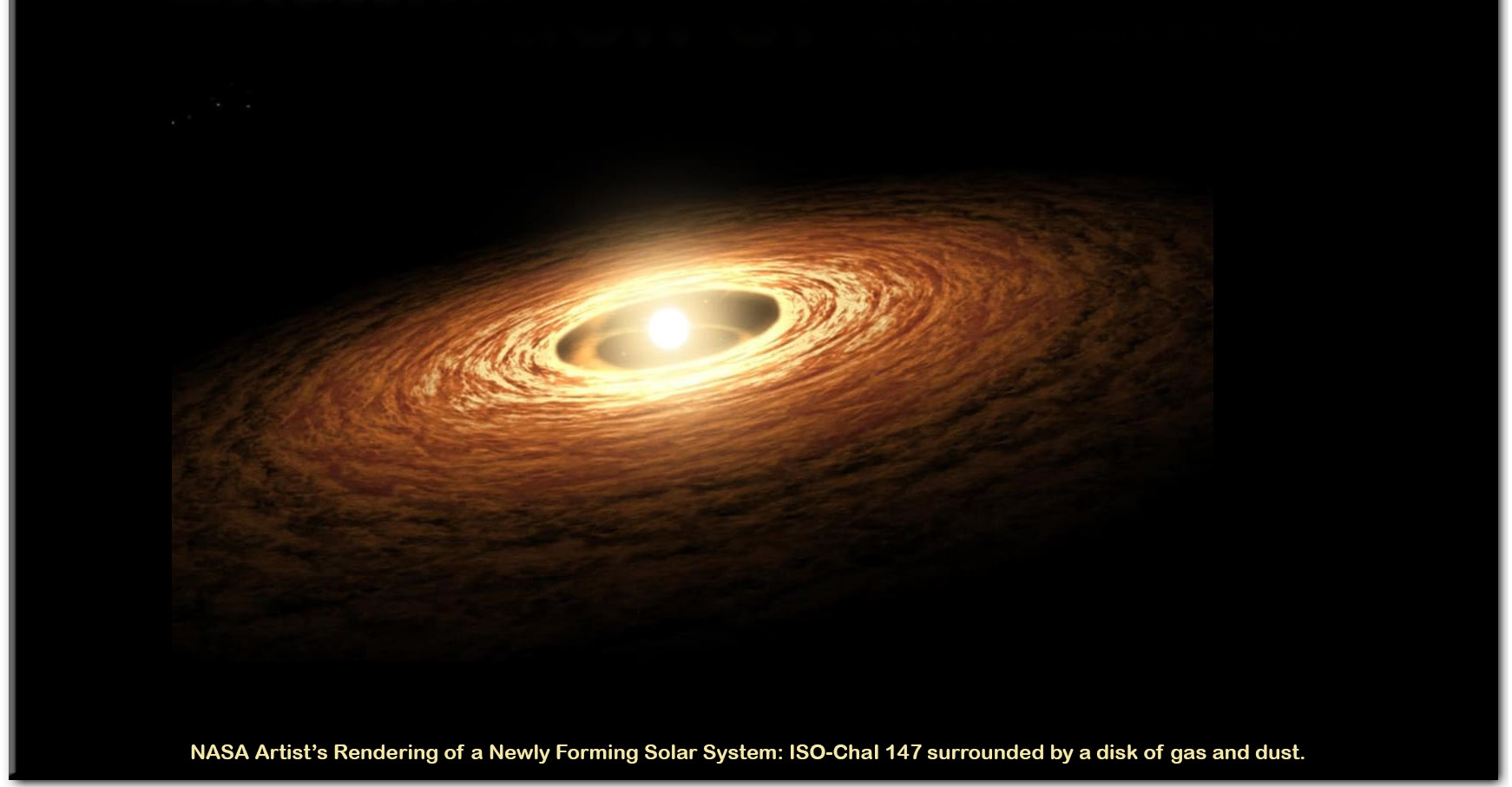
The Earth is around 4.6 billion years old, evolving from a nebula made of hydrogen (from the big bang), oxygen and similar gases (from the death of stars) and heavy metals (from supernovae and perhaps neutron star collisions).
It’s hard to imagine a more violent birth than the birth of a solar system. Although, for the Earth, the process began gently enough, with clouds of gases and dust grains orbiting the sun, slowly coalescing like dust bunnies under the attraction of gravitational and electrostatic forces. For millions of years, elements, molecules, and motes of dust bumped into each other, bonding to become grains, pebbles, cobbles, asteroids, and then, finally, planetesimals with enough gravitational force to sweep up all the debris within their orbits.
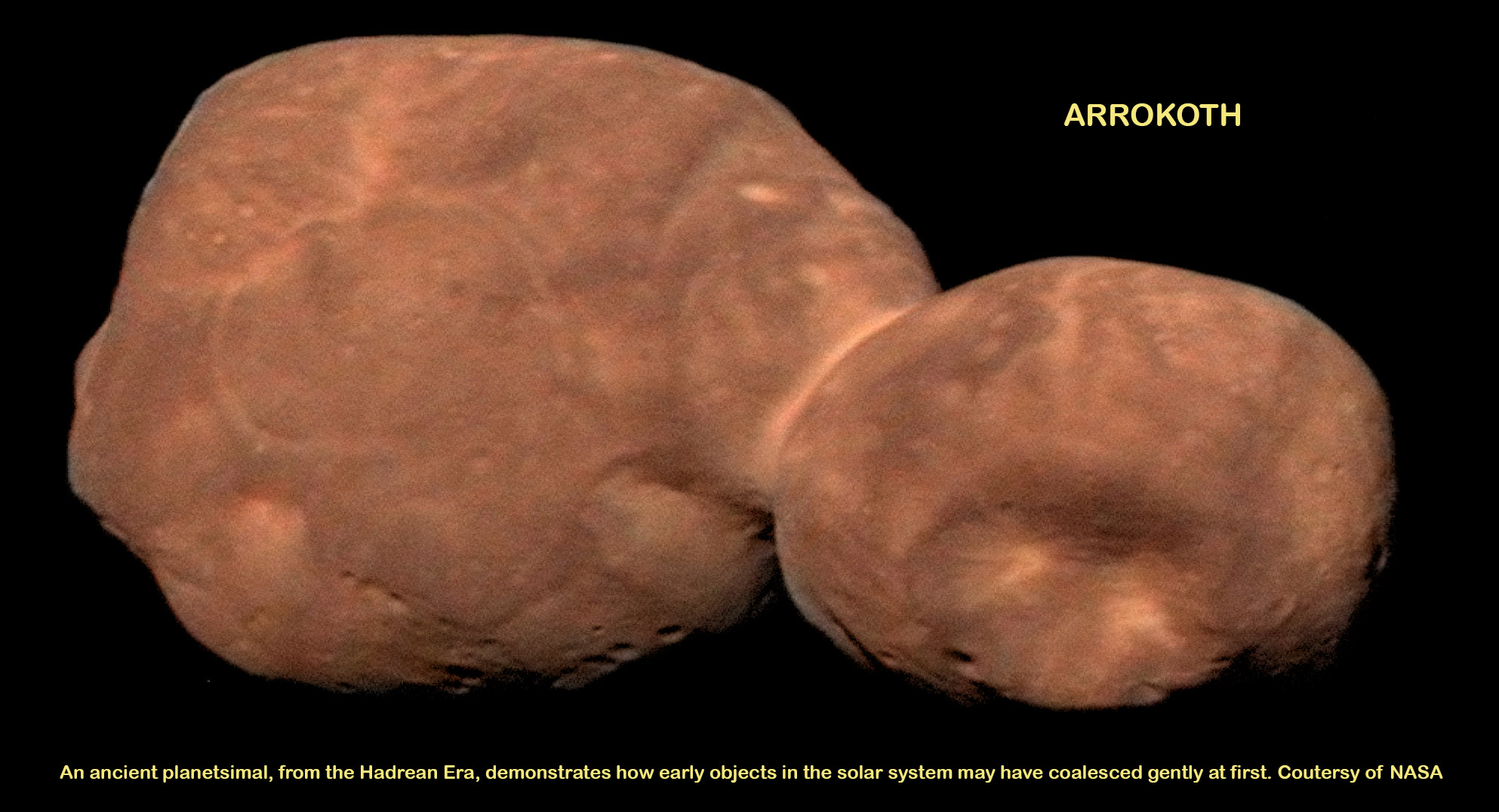
The planetesimals danced in unstable orbits around each other and around the sun while being bombarded by every possible projectile from cobbles and boulders to mountains. They grew exponentially, orbiting each other in an excentric dance until their orbits collapsed. Some of these bodies crashed into each other, but others were slung into new orbits or off into empty space. The planetesimal above, for example, was found in orbit out past Neptune, but it originated among the rocky planets.
 By the author.
And then there's Theia.
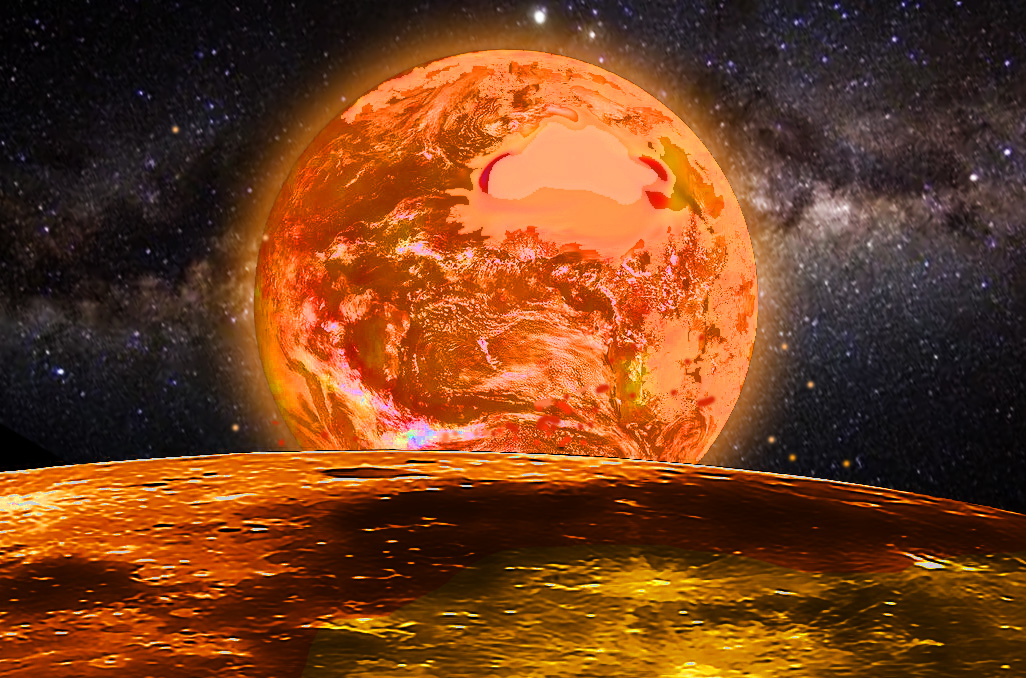
Theia, a world about the size of Mars collided with the young Earth in a glancing blow at roughly 22,000 mph. The impact reduced huge segments of both bodies to magma, and about a third of Theia’s mass merged with Earth. Most of the rest became molten debris around the Earth. Eventually that debris plunged to Earth, coalesced into the Moon, or drifted off into empty space. And so, the planet we call home and its moon were born (battered globes covered with vast oceans of lava). At that time, “our home” would have been around 3,000°F, with a ground level atmospheric pressure of around 1,450psi (around a hundred times our current air pressure).
The Hadean Era was given that name because the Earth was like our vision of Hell (Hades in Greek myth). After its collision with Theia, the Earth had skies blackened with vapors of rock, metal, and glass, plus that super dense atmosphere. Today, you can find those pressures five miles underwater in the Mariana Trench.
The truth is that nobody really knows what was happening during this period, because very little has been preserved. For many years, it was assumed that any water on the Earth would have been boiled off and lost into space. This “dry and parched” theory of early Earth is disputed by zircon crystals that formed at the end of the Hadean Eon. They contain trapped, liquid water. This implies that when the crust was being formed as the Earth cooled, it was formed in the presence of water. This is possible because if the heat is above 374°C and is under more than 3,000psi, water cannot boil, but it cannot remain water, so it becomes something new. Supercritical H2O is simultaneously both and neither liquid nor gas. It exhibits characteristics of both -- behaving like liquid and gas.” Carbon dioxide can also become a supercritical fluid, and so, the original ocean of the Earth will probably have been a combination of supercritical H2O and CO2.
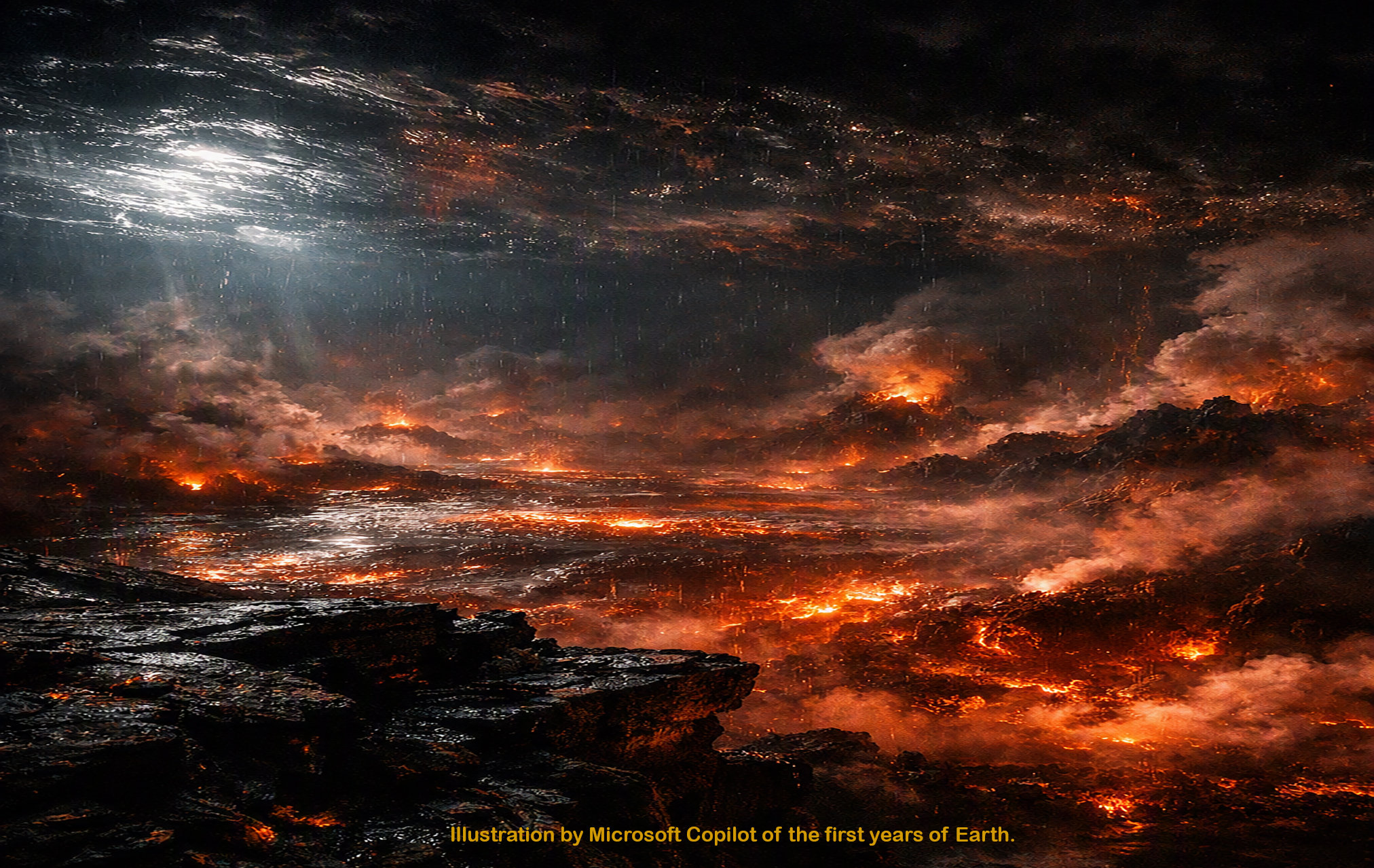
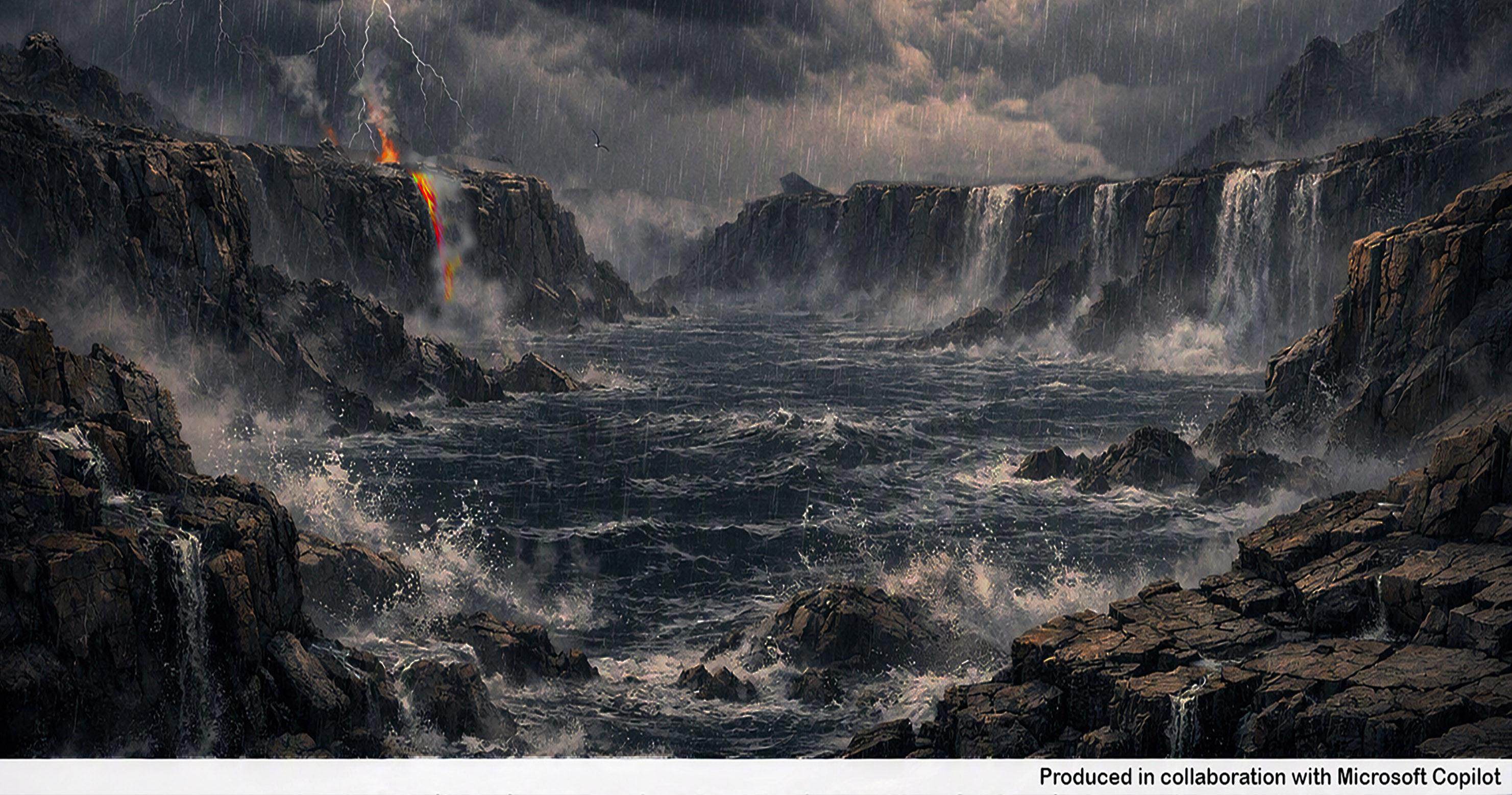
A short relevant story: 4th of July Fireworks Display. We are on a ledge of slag with a view across a valley full of lava. This is just a normal summer day in Earth’s very first climate. We are under a sea of a supercritical blend of CO2 and H2O at about 800°F. Under these conditions, H2O is so corrosive it effectively dissolves rock, metal, or people like sugar in coffee. So, we are crushed, flash boiled and then digested by this supercritical ocean the instant we arrive.
Setting the “flash boiling” aside, we are gazing across a valley of fire with nothing that could be called land, just sheets of slag and piles of basaltic rubble floating on lava, and we are under that sea of supercritical water and CO2. Having the density of water and the fluidity of a gas, the water in this atmosphere is completely transparent, so we can see the surface of this amazing, supercritical sea shimmering against the blackened atmosphere above us. We are surrounded by rock vapor, metal oxides, alkali metals, liquid glass droplets, and sodium vapor. We have to hold our breaths because sodium vapor explodes if it comes in contact with the fluids in a pair of lungs. Of course that is just an ironic joke, because we would never live here long enough to need breathing.
Volcanic and hydrothermal vents create huge thermal updrafts spewing even more soot, toxins, and supercritical water all the way into the upper atmosphere where they spread, blocking the sun. Rain and fog become possible when the temperature gets below 700ºF at a barometric pressure of only 3,200psi, so at around 30,000 feet air pressure and temperatures drop to a level that permits normal water. At that altitude, the skies would be choked with soot-filled clouds and constant, blackened rain. The rain is still hot enough to boil our blood as it covers us, but it soon turns back into a supercritical fluid and falls into a supercritical ocean, never reaching the Earth.
But eventually the Earth cooled.
By about 4.2 billion years ago, the Earth was cool enough for water to exist in its natural state and rain was able to reach the surface. Although the official date of the beginning of the Archean Eon was 4 billion years ago, the Earth was a water world sometime before then.
PART TWO: ARCHEAN EON
After around 100 million years the Earth had cooled from a molten surface into a world covered with water at around 275°F (our second global climate). The transition between supercritical and normal water occurred at decreasing altitudes until the skies poured rain that reached the Earth. It rained, nonstop and eventually formed a permanent ocean (albeit a very hot one).
Although the ambient temperature no longer supported supercritical water, the air pressure remained very high (up to 1,500psi), so in most places, water was unable to boil even at these high, water temperatures. The weather forecast for any day might have been, “Uninterrupted boiling-hot rain for the next ten thousand years.” This world was also virtually devoid of free oxygen. This was Earth’s second climate. While it would have quickly and painfully killed pretty much any life we can name today, it was perfect for a living cell that loved heat and hated oxygen, our Last Universal Common Ancestor (LUCA) … at some point, there was a single cell that could stand the heat.
There are several theories attempting to describe life's first efforts.
While the Earth would have had virtually no free oxygen in its atmosphere or oceans, and it while would not be survivable for most modern animals, it was perfect for our first ancestors. They would have been anaerobic, thermophilic protolife (oxygen-hating, heat-loving almost-life), and they got their energy from the heat and chemistry of the water (literally, a natural, self-recharging battery). There is good evidence in our DNA that our first ancestors were descendants from these not-quite-alive, heat-loving, oxygen-hating cells.
One early theory of the origin of life on Earth was that lightning strikes, in a primitive atmosphere containing ammonia, created organic molecules. This theory was proposed in the late 1950s, when Stanley Miller and Harold Urey combined organic gasses in a flask and sent jolts of electricity through them. They were able to produce organic molecules and concluded that lightning bolts in a primitive atmosphere might produce early life.
While it is true that scientists have created organic molecules by passing electricity through ammonia, the Archean atmosphere probably contained only trace quantities of ammonia. On the other hand, the atmosphere almost certainly contained organic molecules (mostly methane). We even find organic molecules in meteors, asteroids, and space dust. These molecules exist naturally in the crust, the water, and our atmosphere. The problem is not finding organic molecules to make life. The problem is finding a condition on Earth where the appropriate molecules might be so densely packed in a cell that they tend to merge into more complex molecules that might eventually be able to reproduce and evolve.
A second theory, proposed by David Deamer and Bruce Damer, is that geysers could pour these molecules into ponds that evaporated as often as they were filled, so that the organics become densely packed. Once densely packed, the molecules might merge into polymers that could become proteins and RNA-like polymers.
This has been tested in laboratories, and has achieved limited, positive results, but also has some serious problems. Principal among these is the problem with conditions at the surface of the Earth during the Archean Eon. In many respects, unlike now, the surface of the Earth was a much more hostile environment. Today, we have a layer of ozone that protects us from deadly radiation. In the Archean period, there was no such protection. Unchecked, intense ultraviolet radiation damages organics. Moreover, constant wetting and drying of organic materials tends to change it into tar or asphalt.
A newer and perhaps a more promising theory of first life posits that organic molecules arose and evolved spontaneously from under extreme pressure, heat, abundance of appropriate chemicals in a sheltered place with running water and electricity – in hydrothermal vents.
There are three kinds of such vents: black smokers and two kinds of white smokers.
- The black smokers largely exist along mid-ocean ridges (e.g., mid-Atlantic) where the tectonic plates are being pulled apart . Seawater plunges through fissures into direct contact with extremely hot magma chambers deep below the ocean floor. Kept under high pressure the water is extremely corrosive, so it dissolves a witches’ brew of iron, copper, zinc, manganese, hydrogen sulfide, along with metal sulfides. This brew would kill most life on Earth, and it is spewed into the deep ocean though vents as a liquid that looks like thick, black smoke.
- White smokers can be subdivided into white smokers,” and “lost city, alkaline smokers.”
- Regular white smokers act like black smokers but operate at temperatures much cooler (250°C to 300°C), and produce chemicals such as barium, calcium, and silicon (not poisonous but also not useful for producing life).
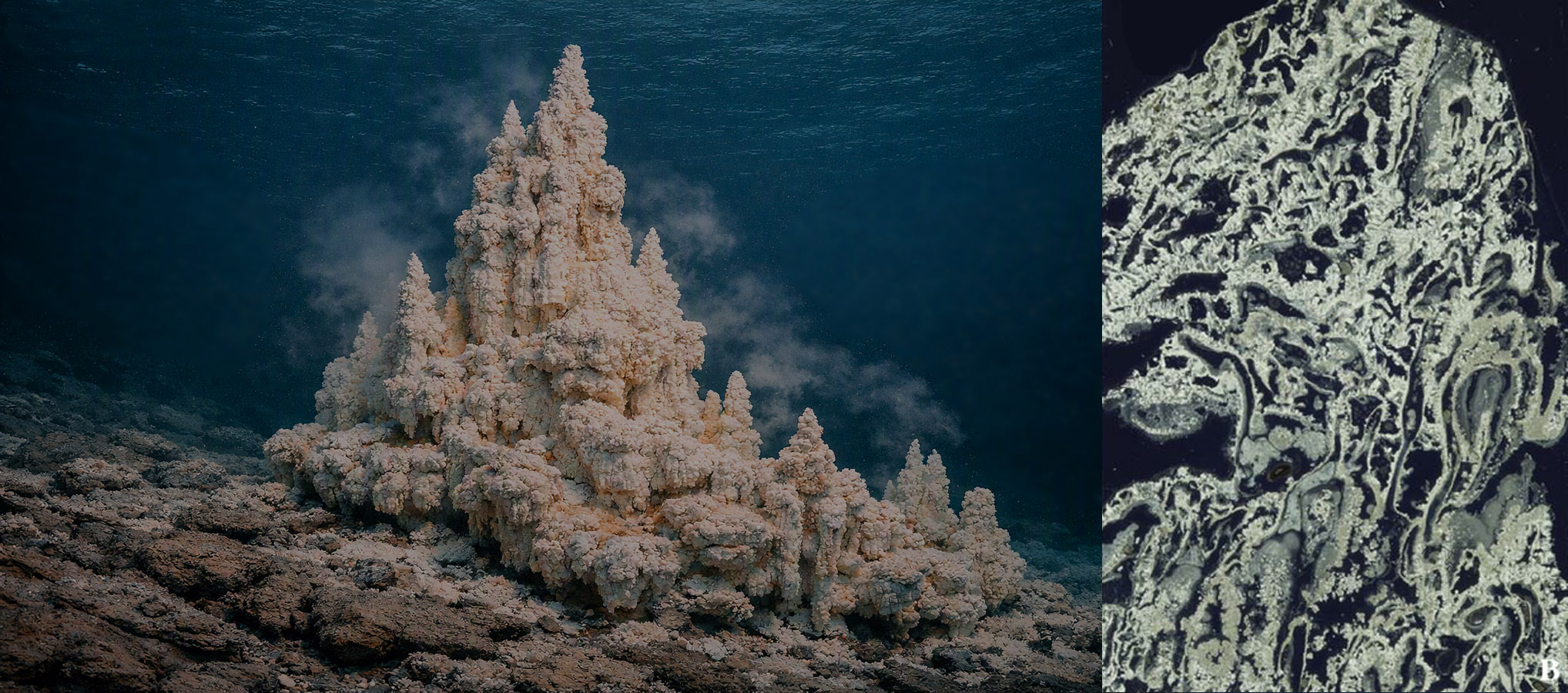
- “Lost city” smokers are even cooler (40°C to 80°C) and produce organic molecules like methane, ethane, propane (carbon and hydrogen), formic acid, acetate (carbon chains), fatty acids (organic molecules that spontaneously form cellular membranes), and precursors to organic phosphorous (backbone of DNA and RNA), plus hydrogen and chalk loaded with excess electrons. The vent is literally a self-charging battery with the vent as its anode.
 By the author.
These Lost City vents are powered by sea water that is pushed through cracks in the crust into hot, olivine deposits. The water heats to above boiling and reacts with the olivine, converting it into serpentine before blasting back up out of the seabed carrying treasure trove of minerals and organic chemicals. It is not unreasonable to suspect that something resembling alkaline vents were home to Earth’s first life.
The spires in the alkaline vents are made of soft, porous calcium carbonate (limestone or chalk) settled out of the water from the vents. As the calcium carbonate precipitated out of the water, it carried a trove of minerals, including iron sulfide (an effective catalyst).
During the Arcadian Eon, the oceans would have been full of dissolved CO2 and therefore, relatively acidic, while the waters of the vents were full of hydrogen and dissolved minerals and were alkaline.
In theory, an alkaline cell in an acetic environment, would have a negative charge and would be surrounded by a positively charged medium. In a sea full of dissolved CO2, H2, and minerals, the electrical difference could power metabolism. The cell could make the organic molecules it needed to evolve into a living thing.
A problem with that argument is that these cells would almost certainly be fragile – unlikely to survive in this harsh environment. Also, if they are free floating, they will, no doubt, immediately drift out of the hydrogen-rich water plume, and lose its access to hydrogen.
So, the “lost cities are the source of life” theory, posits that these structures are full of pores, where a cell might be safely sheltered, giving it access to all of the hydrogen it can use and time to fully develop in a sheltered place.
 Courtesy Nick Lane et al.
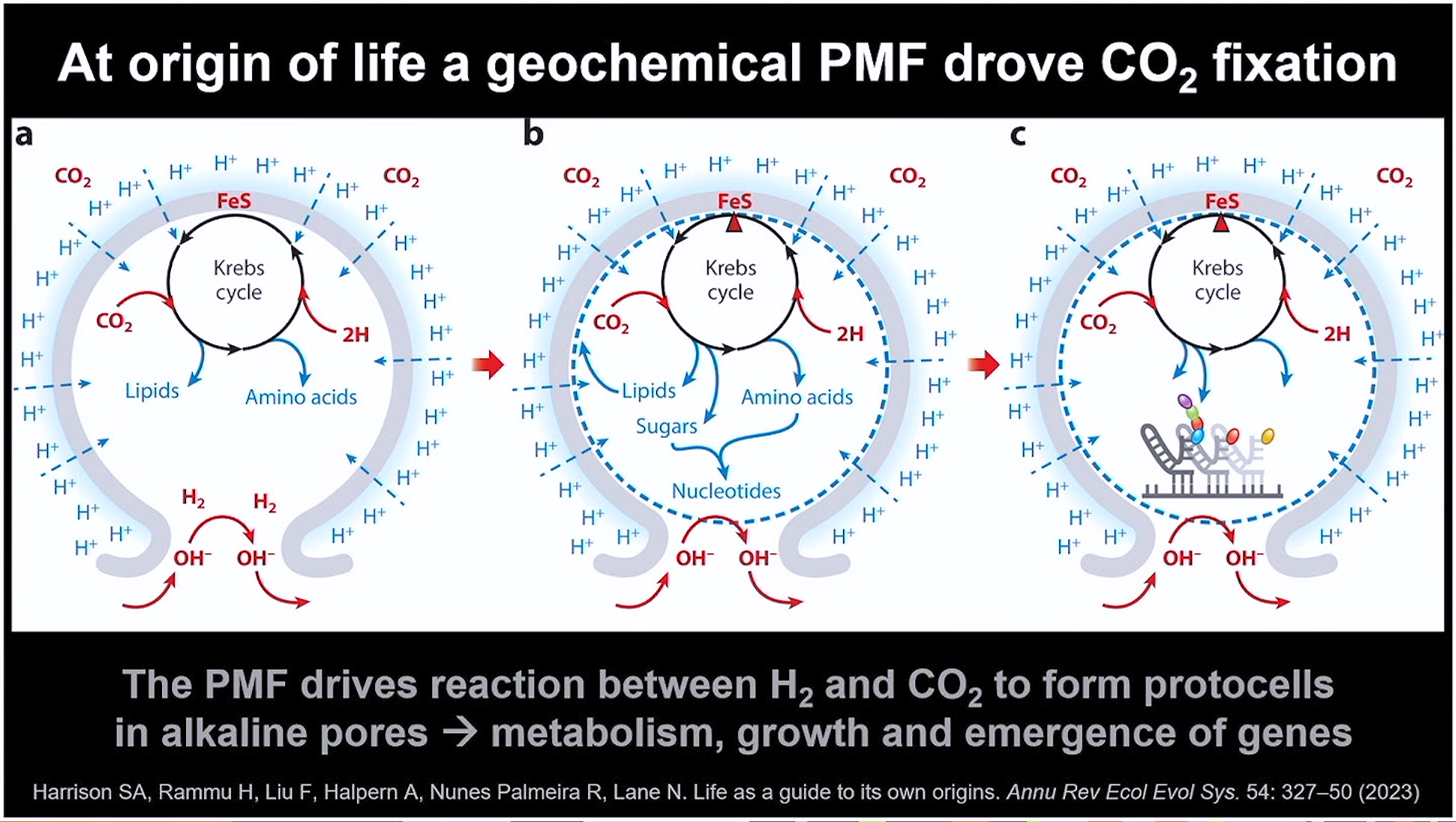
The cells depicted in the chart above are microscopic pores in the chalky walls of an alkaline hydrothermal vent. In the cell on the left in the chart we see a cycle where the chalky wall of a pore in a vent can host life-like chemistry. The H+ ring around the cell creates an electric field. The gray line is a permeable boundary of chalk and iron sulfide. CO2 flows easily into the cell, while hydrogen is provided by the vent fluids (bottom of the cell).
CO2 pours into the open space of the cell through the cell walls. Hydrogen (H2) is also carried in by alkaline water from the hydrothermal vent. In the walls of the cell are elements of iron sulfide (gray walls of the cell above ). In the presence of the FeS catalyst, the hydrogen and CO2 combine to provide organic molecules. These molecules can then be processed into more complex molecules.
Why does this work? Imagine for a moment that you have a bottle of Carbon Monoxide and hydrogen (syngas), and you shake it furiously. Despite the flammability of the gases, nothing will happen. Now imagine that you pour a few ounces of Florine into it. That isn’t something you ever want to do because the bottle will explode, and the injuries to you and anybody nearby will be serious. If you mix the right chemicals together in the right container in the right combination … and you add a catalyst … a chemical reaction will happen no matter what else you do … it is automatic.
The chemistry above produces lipids (including fats and oils) and amino acids (fundamental building blocks of protein). The fatty acids are hydrophobic (hate water) at one end of the molecule and hydrophilic (loves water) at the other end. When in water, these molecules combine into a sphere that protects the hydrophobic end. If the sphere also holds water, the molecules create a second sphere facing inward, with the hydrophobic parts between the two spheres. This creates a membrane that can protect the interior of a cell.
You can see this in the second cell depicted in the chart above. In this cell, there is now a membrane surrounding the cell, and the original organic molecules made from the CO2 and H2, are being recycled into more complex molecules … including the molecules needed to produce complex lipids, amino acids, and nucleotides.
The un-random-ness of random RNA patterns.
The freely available electric field permits the reaction between chemicals to happen spontaneously. The process is described by the authors of the above chart as, “chemistry running downhill.” In short, the process churns out organic molecules for as long as the chemistry is available. In theory, at some point, the automated processing of organic chemistry into organic molecules such as protein, RNA, and even DNA.
But, in response to generating a biotic cell abiotic materials, Sir Fred Hoyle proposed the “Junkyard Tornado” analogy. This famous analogy, published in his 1983 book The Intelligent Universe, asks us to imagine a tornado passing through a junkyard. What are the chances that it would leave behind a completely assembled, functioning 747? Hoyle's answer was that the possibility of such a thing would be vanishingly small.
His analogy, however, is not analogous. Suppose, instead, we have a different analogy. We do not have a junkyard with nearly infinite object possibilities. Instead, we have a language with only four characters (A, U, G, C) and all the words in this language are made of only three characters. That gives us a language with only 64 spelling possibilities and 61 of these possible words are meaningful.
This means that 95.3% of the time, a meaningful word is produced (each of the 61 possible words appear 56,250 times for every million random words produced). In this case, the tornado does not pass through the junkyard – it stays in a junkyard of an infinite number of meaningful words repeated again and again, spitting out A, U, G, and C words for millions of years – creating meaningful strings of RNA thousands of times. The question is not, “how did life spring up from chemistry?” The question is, “How could life possibly not spring up from chemistry?”
Life appears to have sprung up as soon as it was possible.
In the right environment, under the right circumstances, abiotic chemistry spontaneously produces
- Amino acids
- Fatty acids and amphiphiles
- Nucleobase precursors
- Sugars
- Phosphate-bearing compounds
The PROTOCELL
 By the Author.
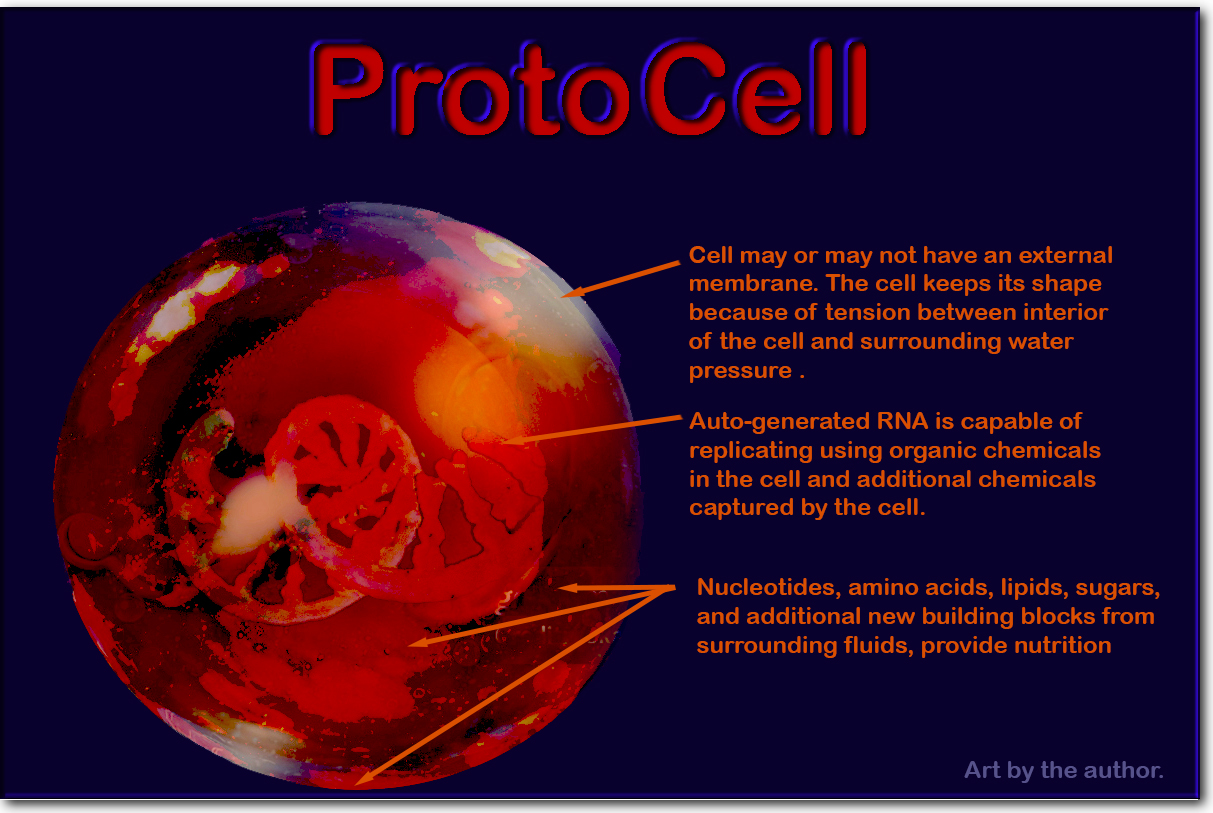
First life and RNA. Whenever they first appeared, the protocells had most everything they needed to be alive, but the elements just weren’t put together quite right. For example, the right combinations of carbon, oxygen, hydrogen, nitrogen, and phosphorus can produce RNA, the first self-replicating molecules. How this came about is still debated, but RNA would have been the workhorse for metabolism and replication in these early cells, and thioacetate esters or thioester (one of the available molecules) has the ability to spontaneously produce RNA. All of the appropriate molecules might have come together under great compression within a pore in one of the vents in the alkaline smokers. In millions of years of exhausting billions of nearly acceptable combinations of chemicals, statistically, some of them will have been vital, living cells, capable of evolving, and one of them is our great-great-great … grandmother.
At first, reproduction will be by accident, but at some point, a few of them will have taken the next evolutionary step and learned to reproduce by themselves. That would require reliable RNA replication as a stable way to pass on genetic information. We know that this happened, but we do not know when. These billions of fat droplets formed 24 hours a day by the millions for millions of years. Even with the odds against life forming under such conditions being a billion to one against formation, even at a billion to one, life was bound to happen.